



PREVENTION (VACCINATION) AGAINST PNEUMOCOCCAL DISEASE
Pneumococcal disease is a term used for diseases caused by the bacteria Streptococcus pneumoniae, also known as pneumococcus. Streptococcus pneumoniae (pneumococcus) is a gram-positive bacterium that causes a wide range of diseases in humans.
According to the capsular antigen, we distinguish more than 90 pneumococcal serotypes, each with different virulence, prevalence, and antimicrobial sensitivity. The most virulent types among adults include serotypes: 1, 3, 4, 6B, 7F, 9V, 11A, 14, 15C, 19A, and 19F.
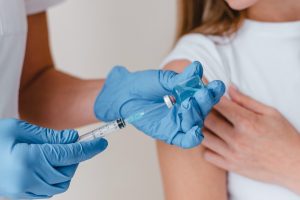
SERIOUS DISEASES THAT CAN BE CAUSED BY PNEUMOCOCCUS
The diseases that pneumococcus can cause include:
- Pneumonia
- Meningitis
- Febrile bacteremia
- Middle ear inflammation (otitis media)
- Bronchitis
- Sinus inflammation (sinusitis)
Diseases like pneumonia, meningitis, and febrile bacteremia can be life-threatening, while the others are usually milder manifestations of pneumococcal disease. Pneumonia is considered the most common clinical manifestation of pneumococcal disease in adults, while otitis media is the most common clinical manifestation in children.
The presence of bacteria does not always mean that it will cause disease. Bacteria can reside in the nasal mucus of children and adults as a normal resident of the mucous membranes of the pharynx and oral cavity, from where it can spread to the nasal cavity’s mucous membrane. Even in one-third of healthy children, pneumococcus can be found in the pharynx.
HOW IS PNEUMOCOCCUS TRANSMITTED AND WHO IS MOST OFTEN INFECTED?
Pneumococcus is transmitted through direct contact with the respiratory secretions of an infected or healthy person who carries the bacteria. Pneumococcus is the causative agent of many infectious diseases, primarily affecting children and the elderly.
For children under five, pneumococcus is the most important bacterium that can cause disease. Among children older than five years, pneumococcal infections are less frequent, but that doesn’t mean they are immune. Pneumococcus again becomes a significant cause of infections in people over 65 years old due to a weakened natural immunity.
In developed countries, severe forms of the disease mainly occur in children under two and the elderly. A weaker immune system increases the likelihood of infection and disease development in these two age groups: children under two years (who are immunologically immature) and people over 65 years (weakened natural immunity and the presence of comorbidities).
WHY SHOULD WE GET VACCINATED?
Pneumococcal resistance to conventional antibiotics is becoming increasingly common, which further emphasizes the need for other effective methods to control pneumococcal disease, such as vaccines.
Data indicate the seasonal occurrence of the disease, with the number of patients with invasive forms of the disease peaking during the winter months (December to February). Environmental factors, such as viral flu infections, can increase the risk of developing invasive pneumococcal disease or pneumococcal pneumonia.
The risk of pneumococcal pneumonia and invasive pneumococcal disease (IPD) is increased in children under five years of age, adults over 65, and people with chronic lung diseases, heart, liver, and kidney diseases, or immunodeficiency conditions.
Pneumococcal pneumonia and IPD can be prevented through vaccination, which is a highly effective public health strategy as it can reduce the incidence of the disease and thereby decrease healthcare costs.
TYPES OF PNEUMOCOCCAL VACCINES
There are two main types of pneumococcal vaccines:
- Polysaccharide conjugate vaccine, which protects against 13 types (Prevenar 13)
- Polysaccharide vaccine, which protects against 23 types (Pneumovax 23).
High-risk individuals with compromised immune systems and those without a spleen should receive both vaccines. Vaccination in adults reduces the incidence of invasive pneumococcal pneumonia. Active immunization to prevent pneumococcal diseases is particularly important for high-risk patients.
Vaccination has been mandatory for children since 2019.
It is also necessary for adults and specific groups of patients:
- Patients with removed spleen or sickle cell anemia
- Patients with primary immune deficiency disorders
- HIV-infected patients
- Patients with solid or hematological tumors
- Patients undergoing hematopoietic stem cell transplantation
- Candidates for solid organ transplants and recipients of such organs
- Patients in the terminal phase of heart, liver, kidney, or lung disease
- Patients with chronic inflammatory diseases who are on immunosuppressive therapy
- Candidates for cochlear implants.
Healthy individuals develop a good immune response to most subtypes of pneumococcus within 2-3 weeks after receiving the vaccine.
For adults, the pneumococcal vaccine is given as a single dose and provides lifelong protection!
In children, the pneumococcal vaccine can be administered simultaneously with vaccines in the regular vaccination schedule.
REGISTRATION FOR SEASONAL FLU VACCINATION FOR CHRONICALLY ILL AND ELDERLY INDIVIDUALS IS ONGOING. IT SHOULD BE DONE BETWEEN OCTOBER 15 AND NOVEMBER 15.
Dr. Nina Nikolova, MD
